





SHRINKING POLYURETHANE 2# DENSITY CLOSED CELL FOAM STUDY
Shrinking SPF is normal (up to 2%) of the original dimension. It may also grow up to 3% due to the “recipe” of the particular brand of SPF. These parameters are normal and within industry standards. This normal shrinking or expanding is common. It takes place as the SPF cools, and the gas within the cells contract. All of this normal “contraction/expansion” takes place shortly after being sprayed in place (usually less than an hour) and is completely stable after that.
Because the normal material adheres tenaciously where it meets clean dry substrates, it is extremely difficult to remove and requires special chemicals to remove the material, even from glass. When overspray lands on glass it usually requires a razor blade to remove it. Because it is spray applied, the material rises toward the same direction as the spray (where it is not confined). If and when it shrinks (up to 2%) the dimension of the material shrinks in depth while adhering on the other 5 sides. The adhesion is one of the most useful things about SPF. It stops air infiltration and is completely airtight minimizing energy transfer. It also acts like glue, doubling or even tripling the overall structural strength of the building.
Whether the material will shrink (or expand) after being installed depends upon the chemist’s “recipe” for the material. The chemist blends many chemicals to produce a Resin (“B”) component. When combined with isocyanate (“A”). This produces a material with specific physical properties. The chemist can produce many different (“recipes”) that affects the final form of the materials in a predictable way. This means there is a possibility of “bad material” simply because of the complications of blending, the variety of chemicals and quantities. This doesn’t consider human error in blending or variations in the consistency of raw materials used to make the foam. On the technical datasheet (which is proprietary to each manufacturer) there will normally be results for stability testing in various atmospheres. The various atmospheres are to mirror different variables of job conditions including humidity and temperature variations to include the widest range possible for application and in place performance.
Note: Sprayed polyurethane foam materials must not be altered after they leave the manufacturing facility because it will make changes to physical results.
The in place dimensional stability test method used by the industry to test is ASTM D2126. When conducting this test, specimens are placed in in a climate controlled environmental chamber for at least 14 days. The specimens to be tested will be free of adhesion (free standing) with no resistance from anything except the foam itself.
The results of this testing the following should be expected:
- Maximum shrinkage: 2% or less
- Expansion maximum should be less than 5%.
Note: foam that expands does not affect the in-place performance as it enhances seal and insulation properties
Since SPF is a site manufactured material all chemical manufacturers recommend optimal pressures (approximately 1000psi) and temperatures (105 to 125 degrees) for the machines to deliver the chemical to the tip of the gun for applications.
On rare occasions (like this one), where the chemicals are not blended correctly or consistently designed dimensional stability and adhesion properties are compromised. When sprayed it can look exactly like it should and then drastically shrink (in this example over 20%) months or even years after the application.
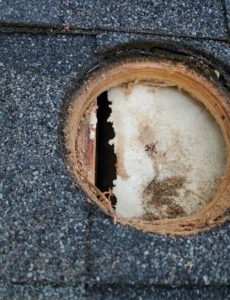
After these deficiencies were discovered by the owners, the builder drilled several holes in the roof deck for inspection. The gap (in figure 1) between wood structure and the SPF insulation is approximately 1” wide. Notice the the SPF is no longer adhered to the bottom of the plywood decking. The plywood deck was saturated with water. Each inspection hole showed similar results.
Figure 1
The builder then removed several large areas of shingles and roof decking (see figure 2)
Figure 2
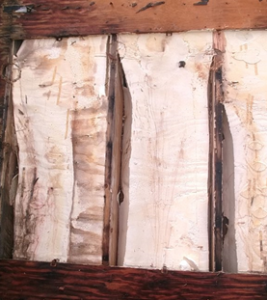
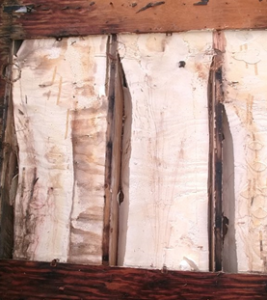
In figure 2 the roof sheeting has been removed in a 4’x5’ area. As you can see the SPF has shrunk approximately 2-3” along the rafters and the same in each cavity. Also you will see the smooth surfaces where the SPF should have adhered to the bottom of the plywood decking. Notice the wet wood stains on the top of the SPF. Also notice the plywood is wet under the shingles and underlayment as well.
This is the result of vapor drive (from inside the building) during the winter, through the gaps around the SPF. It condenses on the bottom of the plywood decking and the plywood has absorbed the water until it is saturated.
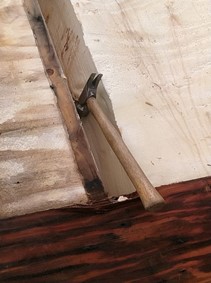
In figure 3 the hammer is laid in the gap to put the gap in perspective. Notice the water stains and the wood grain on the side and top of the SPF is evidence that the SPF did originally seal the gap but did not continue to adhere.
Figure 3
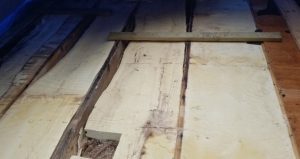
When more plywood is removed (figure 4 below) the conditions are the same as above in every cavity and from end to end.
Figure 4
Cell Structure:
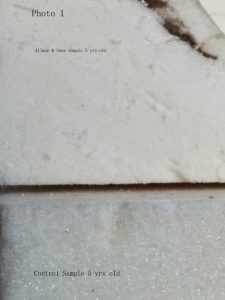
Note: in figure 4 a sample is removed for study in the lab. Photo 1 is a closeup of the sample of (taken from Figure 4 side by side with the control sample. Both pieces are approximately the same age (5 years). In the sample on top the cells have collapsed and the structure of the foam shrinking and separating from the cured surface skin of the SPF. In the bottom control sample approximately the same depth the cell structure is uniform in size and consistent across the complete sample (2# density SPF).
Conclusions:
- The SPF insulation in this example has (and is) shrunk more than the 2% (up to 25%) stated by the manufacturer.
- This installation appeared normal for the period between installation of foam and ceiling covering installation. This is confirmed by the building inspector during the installation inspection. The owners, the builder, and trades (electrical, plumbing, heating, etc.) observed the insulation during the elapsed time before the drywall ceiling was installed and none observed anything out of the ordinary. All these people having had much experience with spray foam installations prior to this installation. The original installation looked normal and within manufacturer suggested parameters during construction.
- The manufacturer was obligated to meet the testing standards spelled out on their Technical Data Sheet and in the Building Codes. The foam formulation (at least this batch) is definitively defective. The shrinking is nearly constant through the whole roof structure. If it were an installation problem the defects would be small areas and local (there is no such thing as smart foam and dumb foam). The entire batch was defective (roof and possibly walls).
- That completely replacing the roofing, underlayment, wet decking and the insulation is the minimum necessary to repair this. There is possibly structural framing that is rotted and needs replacing. There is most likely some mold that has grown in the air cavities and cannot be allowed to communicate with the interior air.
- The replacement foam in this case should be applied from the outside onto the back side of the interior finish (mostly drywall), to achieve air tightness, improve the structural strength and provide the necessary vapor retarder as close as possible to the warm (in winter) interior of the house.
Note:
The inspection was initiated by Allman and Sons Insulation and carried out by Steve Eddy. It was witnessed by representatives of the owners of the home, the builder, and the Architect. The lab tests and pictures are by Steve Eddy Associates who are not affiliated with the foam manufacturer of this foam. The observations and information herein are the sole property of Steve Eddy & Associates and cannot be duplicated (all or in part) without written approval of Steven R. Eddy, owner.
For more information, contact Steve Eddy at Steve Eddy & Associates:
steve@steveneddy.mygbiz.com